How AI Cuts App Development Time by 70%: Omniflow's Approach
 Turning an app idea into a finished product involves navigating multiple app development stages, each critical to the final outcome. And that has never been an easy task.
From planning and design to testing, deployment, and maintenance, building modern software is a complex, time-consuming process.
Effective project management and the expertise of app developers are essential for successfully navigating all app development stages and ensuring a focused, efficient build.
The problem is that for startups, agencies, and internal product teams, slow development cycles don’t just delay launches, they increase costs, reduce competitiveness, and drain momentum.
This is why so many teams are turning to Lovable and Base44 alternatives, and searching for ways to cut app development time without sacrificing quality.
Today, there are many artificial intelligence-powered platforms making that possible by streamlining project management and supporting app developers throughout various development stages.
However, only platforms like Omniflow are proving that AI doesn’t just make development faster… It makes it smarter, more reliable, and more scalable than ever before.
Why App Development Takes So Long
Traditional development workflows have always been fragmented due to the number of departments or personnel involved in each step of the process.
Development teams must clearly define the app's scope and manage app complexity throughout the development process to avoid misalignment and delays. And even then, teams typically rely on a handful of individual tools for:
Product documentation
Design
Engineering
Testing
Deployment
Monitoring
The problem is that each handoff and each individual tool being used introduces friction. Revisions create delays and misalignment leads to rework. Which means that over time, teams experience slow feedback loops, outdated documentation, repeated UI rebuilds, broken deployments, and growing technical debt.
After all, even small changes or bug fixes can take days or weeks when they ripple across multiple systems.
This is why teams often struggle to cut app development time using conventional processes.
 How Omniflow AI Restructures the Entire Workflow
Omniflow AI doesn’t just automate development tasks, it removes bottlenecks.
By streamlining the app development process, AI shortens the development cycle and accelerates every phase compared to traditional software development, which typically involves more manual planning, coding, and testing.
With modern AI-powered platforms, teams can now:
Generate interfaces automatically
Create workflows from natural language prompts
Maintain living PRD documentation
Edit visually in real time
Sync changes instantly
Automate integrations
This compresses every stage of development. Instead of building foundations from scratch, teams start with working systems and iterate quickly.
This transformation is something that we've explored in detail in how generative AI is reshaping the product lifecycle.
AI Design Generation: Eliminating Weeks of Manual Work
Design is one of the biggest time sinks in development.
AI accelerates the app design process by generating user interfaces and user-friendly interfaces in seconds, streamlining that initial and often time-consuming stage of development.
Traditional workflows require multiple rounds of mockups, reviews, and handoffs before any code is written. Developers then spend additional time recreating those designs, including the creation of interactive prototypes and interactive elements that enhance the user experience.
Omniflow replaces this with AI-powered design generation and visual editing. Teams can now generate usable interfaces instantly and refine them inside the platform.
This aligns with the workflow we've described previously in how to choose UI before you build. Either way, by validating UI early, teams avoid weeks of rework.
Live-Syncing PRDs: Ending Documentation Drift
Outdated documentation is another of the most underestimated causes of delay.
Keeping documentation aligned with the project timeline and minimum viable product requirements ensures that core features are delivered efficiently.
When PRDs don’t reflect reality, teams waste time clarifying requirements and rebuilding misunderstood features.
Omniflow uses living PRDs that automatically sync with the product. Every change in design, logic, or scope is reflected immediately. This system is detailed in how to achieve faster iteration with a living PRD in-sync.
The result is fewer meetings, fewer misunderstandings, and faster execution. Something that all teams, product managers, and founders dream about!
Real Performance Gains: Speed That Compounds
Cutting app development time isn’t only about building faster. It’s also about deploying faster, testing faster, and fixing issues faster.
Since day one, Omniflow has focused heavily on optimizing its build and deployment pipeline. The results below show how performance work compounds over time:
Time to first error feedback: 58% faster
Total deploy time: 34% faster
Package install time per retry: 97% faster
Deploy time per iteration: 51% faster
These aren’t cosmetic improvements.
They translate directly into tighter feedback loops for builders, fewer broken deploys and retries, faster iteration without babysitting CI/CD, more confidence in shipping frequently, and improved app performance and user satisfaction due to faster feedback and iteration.
When teams get feedback sooner, they fix problems sooner. When deployments are reliable, they ship more often. And when iteration becomes painless, development accelerates naturally.
This is how AI-driven infrastructure helps cut app development time at scale.
 Visual Editing: Reducing Frontend Rework
Frontend development is another major potential bottleneck for teams.
Small UI changes often require editing components, adjusting styles, testing responsiveness, and rebuilding layouts.
With visual editing, teams can quickly adjust functional components and basic functionality, making it ideal for building a simple app. Omniflow’s visual editor eliminates much of this work. Teams can click, edit, and deploy directly from live previews.
This removes unnecessary code changes and speeds up iteration dramatically.
Intelligent Connectors: Faster Integrations
Modern apps rely on dozens of third-party services.
AI-powered connectors streamline backend development and integration with existing systems, making it easier for apps to work seamlessly with organizational infrastructure.
Payments, analytics, authentication, messaging, and CRM systems all require integrations that traditionally take weeks to build and maintain.
Omniflow’s AI-powered connectors automate much of this process, including data processing and the rapid addition of new features, reducing integration time and long-term maintenance.
This removes another major source of delay.
Unified Knowledge Management
As products grow, complexity grows with them. Without centralized systems, teams waste time searching for information and recreating lost context.
Centralized knowledge management ensures that documentation of the technology stack, programming languages, and business logic is easily accessible, reducing confusion and streamlining collaboration.
Omniflow integrates product knowledge directly into the workflow. This approach is explained in how to build an internal knowledge base, which explains how Omniflow allows teams to build better, more cohesive development processes.
No matter how you see it, better knowledge management means fewer mistakes and faster decisions.
Why Omniflow Helps Teams Cut App Development Time by 70%
When combined, Omniflow’s AI-powered features create compounding efficiency.
Omniflow streamlines the entire process of building an entire app, from developing core app features to ensuring alignment with business objectives.
Teams benefit from:
AI-generated foundations
Automated UI creation
Live documentation syncing
Visual editing tools
Intelligent connectors
Optimized deployment pipelines
Instead of managing tools, teams focus on building products, which accelerates the path to app success and the creation of a successful products. This advantage is similar to what we've described in the best no-code app builders, but with greater flexibility and scalability.
 The New Development Model
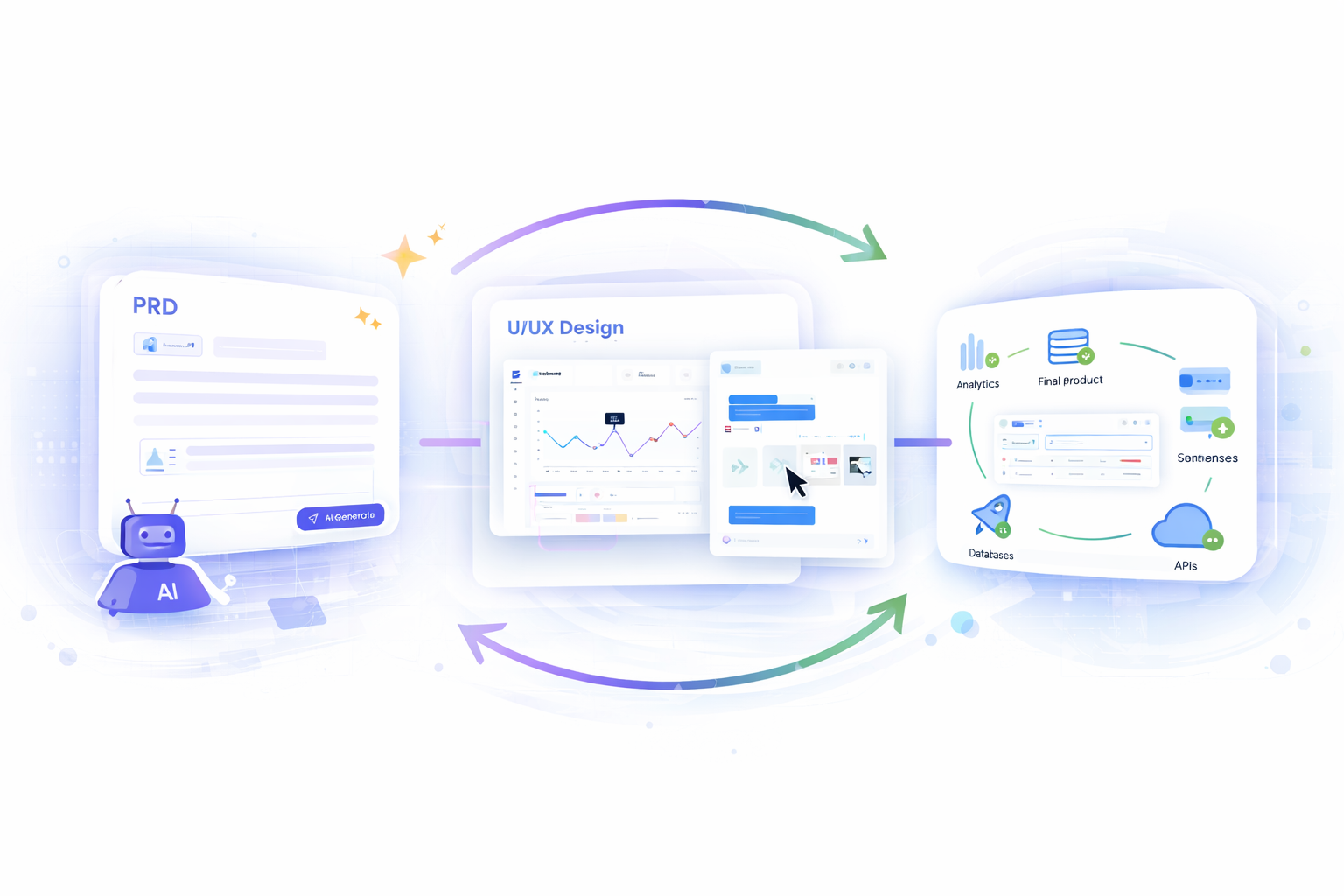
With AI-powered platforms like Omniflow, modern teams follow a new model:
Idea → AI Generation → Visual Editing → Live PRDs → Rapid Deployment → Iteration
Not:
Idea → Months of Coding → Constant Rework → Delayed Launch
At each development phase and development stage, Omniflow accelerates the process, reducing the average app development time and average time required for even a complex app with advanced features and robust security.
Even dedicated teams of experienced developers, often working within an app development company, can use Omniflow's approach to deliver high-quality applications that meet the needs of diverse target audiences.
Omniflow directly addresses how long does it take to build apps, supporting both native apps and cross platform development for projects of any complexity.
This is what enables Omniflow to allow teams to cut app development time by 70% or more.
Ready to try Omniflow for yourself? Sign up today and try Omniflow for FREE!
Frequently Asked Questions
How does AI cut app development time?
AI automates design, documentation, integration, and iteration, removing manual steps that slow traditional workflows.
Can Omniflow really improve deployment speed?
Yes. Recent optimizations reduced deploy time, feedback loops, and retry times by up to 97% in some areas.
Does Omniflow replace developers?
No. It amplifies developer productivity by eliminating repetitive work.
Is Omniflow suitable for enterprise teams?
Yes. Omniflow scales from solo founders to enterprise organizations.
Is AI-based development reliable for production?
When built on structured platforms like Omniflow, AI-powered systems are stable, maintainable, and secure.